 রিপোর্টারের নাম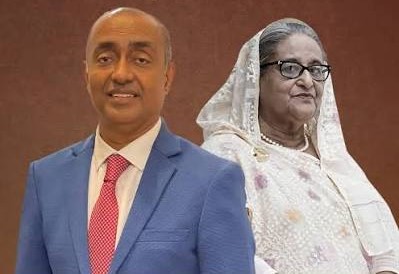
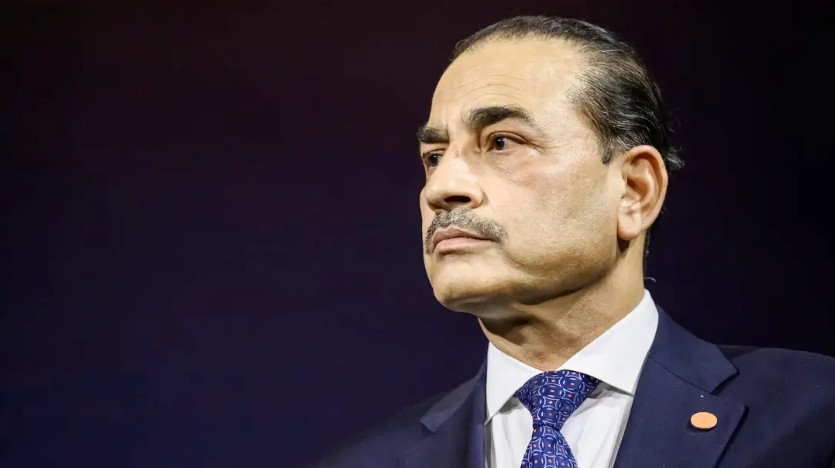
Law Minister Md. Asaduzzaman has said that if Bangladesh’s ousted prime minister Sheikh Hasina, now staying in India, returns to the country, the law will take its own course. He said that if Sheikh Hasina returns to Bangladesh and seeks to surrender, she may be arrested even before she gets the opportunity to do so.
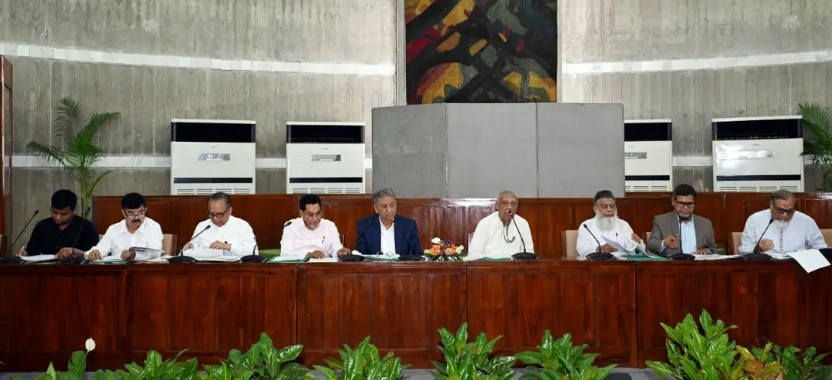
The law minister made the remarks today, Thursday, in response to questions from journalists at an event held at the Ministry of Law in the Secretariat. The event was organised to mark the signing of two separate Memorandums of Understanding (MoUs) between the Department of Legal Aid of Bangladesh (DLAB), the Bangladesh Legal Aid and Services Trust (BLAST), and BRAC”s Social Empowerment and Legal Protection Programme.
Journalists asked the law minister about the government’s plans regarding comments made in various interviews by Sheikh Hasina, who was removed from power through a student-people uprising, that she intends to return to Bangladesh next December.
In response, the law minister said, “First of all, how do you know whether the Ministry of Foreign Affairs is trying to secure her (Sheikh Hasina’s) extradition or not? Of course, it is trying, I can tell you that. Secondly, even if a person is a death-row convict, if they are a Bangladeshi citizen and want to come to Bangladesh and surrender out of respect for the country’s laws, they may be arrested even before they can surrender. But they do have that right. If she actually comes, the law will take its own course. We will not do anything outside the law. We will exercise the authority that the law has given us.”
A journalist asked how Sheikh Hasina would return since she does not have a passport. In response, the law minister said, “How she will come is her problem. It is not my problem. When she enters our territory, once she comes within that jurisdiction, I will apply the law in accordance with the authority that the law has given me.”
Meanwhile, former Prime Minister Sheikh Hasina has once again announced her intention to return to the country in an interview with AFP.
“I may be killed. I may be arrested. I may be sent to prison,” Hasina, 78, said in an emailed response to questions by AFP.
“I am fully aware of my fate. Still, I want to go back because my people are calling me.”
Toppled in August 2024 by a student-led uprising that ended her 15-year, iron-fisted rule, Hasina fled by helicopter to India as crowds stormed her palace.
The United Nations says up to 1,400 people were killed in crackdowns as she tried to cling to power.
In November, Hasina was found guilty by a Dhaka court of crimes against humanity and sentenced to be hanged — a verdict she described as “political vengeance dressed up as law”.
The former prime minister, who has been living in a secret location in India, insisted there was no pressure for her to return.
Relations between India and Bangladesh, strained under the interim administration that took power after Hasina’s fall, have stabilised since Bangladeshi Prime Minister Tarique Rahman took office in February.
Dhaka has formally requested Hasina’s extradition — a request New Delhi has said is “under examination”.
Hasina said the issue had “no connection” with her decision to return.
“I can say that I am staying in India with due respect and dignity,” she said.
“Indian authorities have not discussed extradition with me. I myself have decided to return to my country.”
Bangladeshi government has said it will ensure Hasina receives due legal process in all cases against her should she return.
Asked if she planned to resume political activity upon her return — with her Awami League party effectively banned in Bangladesh — Hasina did not offer a direct answer.
“Power is not my destination. Service to the people is.”
Hasina said she had “sympathy for every family that lost a loved one” but stopped short of offering an apology.
She also sidestepped questions about whether she regretted any of her decisions during the uprising.
“Decisions of state are not made by one person alone, and they cannot be judged honestly by isolating one moment from the whole crisis,” she said.