 রিপোর্টারের নাম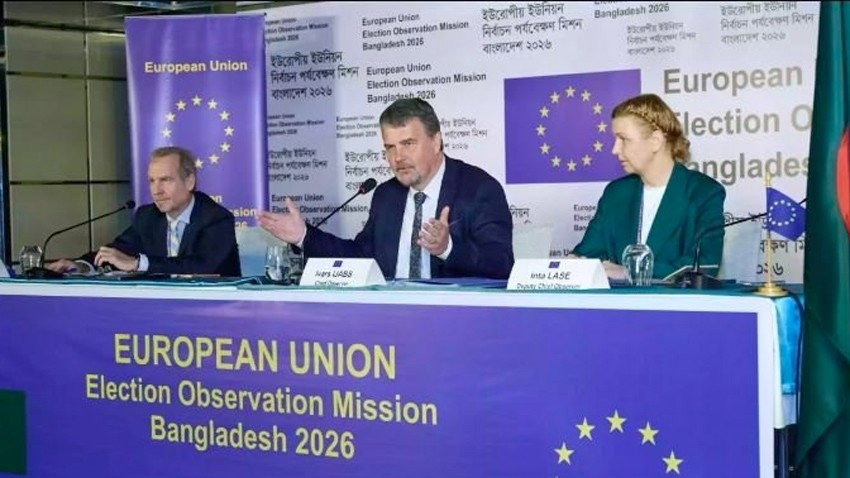
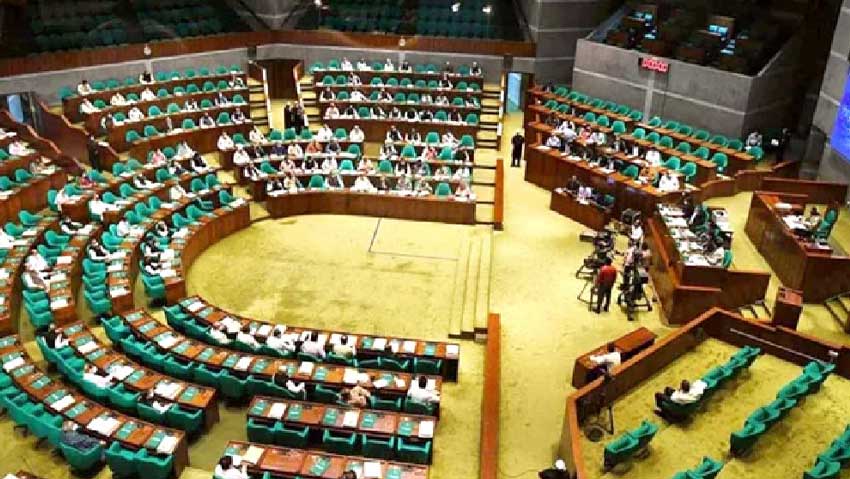
The European Union (EU) has assessed the national parliamentary election as genuinely competitive and broadly transparent, with its chief observer saying monitors found no direct evidence of ballot stuffing or organised fraud.
Speaking at a post-election briefing in Dhaka on Saturday, European Union Election Observation Mission head Ivars Ijabs, EU observers did not witness manipulation at polling stations they monitored across the country.
“I can state responsibly that we did not directly observe fraud or ballot stuffing,” said Ijabs, who is also a member of the European Parliament, responding to questions about allegations raised in certain constituencies. He acknowledged that observers noted some procedural irregularities but said these did not amount to proof of systematic interference in the vote.
Ijabs stressed that any complaints related to individual seats should be addressed through established legal channels.
He urged the authorities to ensure that objections, appeals and post-election disputes are handled in a transparent and timely manner to maintain public confidence.
Commenting on voter turnout, the EU chief observer said participation should not be judged solely by percentages. “Turnout figures alone do not define democratic quality,” he said, adding that the key issue is whether all segments of society are able to take part freely and without exclusion.
Describing the election as competitive, he noted that around 2,000 candidates contested the polls, giving voters a wide range of choices.
The mission’s role, he said, was to assess the process as a whole rather than certify results.
Ijabs highlighted women’s political participation as an area requiring urgent attention, pointing out that women made up only about four percent of the candidates.
Emphasising civic equality as a core democratic principle, he called for stronger efforts to improve women’s representation in line with international commitments.
On minority participation, he said EU observers met representatives of indigenous, religious and ethnic communities during field visits. While no widespread targeting of minorities was observed on election day itself, some communities voiced lingering concerns based on past experiences. Building trust and inclusion, he said, would require sustained effort beyond a single election.
The EU mission also gave a generally positive assessment of the Election Commission’s logistical preparations, citing orderly polling procedures and transparency in areas such as candidate registration. Given the scale of the election, the Commission’s overall performance left a favourable impression, the chief observer said.
Addressing the media environment, Ijabs described Bangladesh’s press landscape as diverse but warned that misinformation, including AI-generated content, poses growing challenges for democracies worldwide and requires continued vigilance.
He welcomed what he described as a willingness among major political actors to maintain calm following the vote, despite reports of isolated tensions. “Political responsibility does not end on polling day,” he said, urging all sides to avoid violence and rely on lawful mechanisms to resolve disputes.
The EU mission has been in Bangladesh since late December 2025 and observed voting in 805 polling centres across all 64 districts. It will remain in the country until early March to follow post-election developments, including the handling of complaints. A detailed final report with findings and recommendations is expected in late April or early May.