4:49 pm, Tuesday, 13 January 2026

Judiciary must see constitutional changes as reality, not threat: CJ


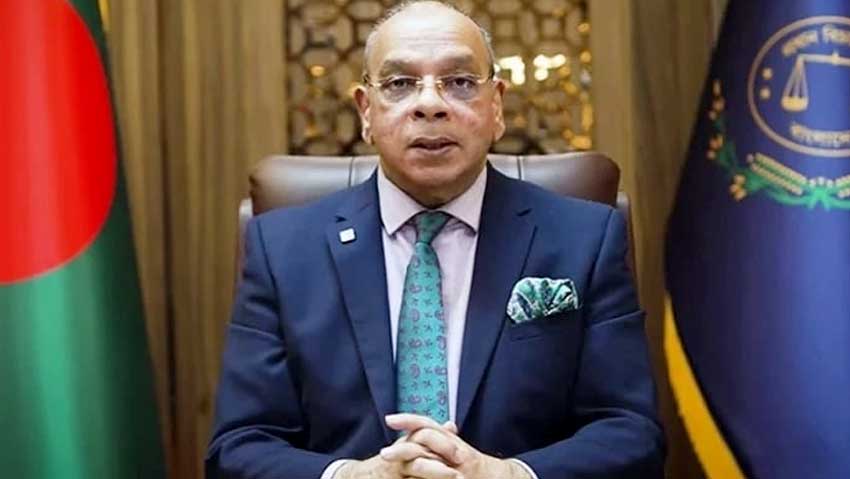
Chief Justice Syed Refaat Ahmed on Thursday urged the judiciary to regard amendments to the Constitution not as a threat, but as a reflection of democratic reality.

“People hold constitutional authority and can amend the Constitution over time. The judiciary must accept this not as a threat but as a democratic reality,” he said while addressing a farewell reception at Courtroom No. 1 of the Appellate Division of Supreme Court.

He highlighted that the strength of judiciary lies not in any single office but in a collective commitment to serve with justice, balance and foresight.


Addressing judges and lawyers of both divisions of the Supreme Court, he acknowledged the significant period they have navigated together in the country’s judicial history and expressed gratitude for their cooperation over the past 16 months.

Refaat Ahmed also emphasized the judiciary’s vital role in national stability.

“The state is run under the Constitution through three principal organs; the legislature, the executive and the judiciary. The Supreme Court building is not merely a structure but one of the three foundations of civic life. Judges are credited for verdicts, but it is the lawyers who shape the language, reasoning and structure of those judgments,” he said.

He added, “In an unstable world, the judiciary’s stability, restraint, integrity and courage can be the most reliable source of national steadiness.”

Chief Justice Syed Refaat Ahmed is set to retire on December 27.

The farewell reception was held in line with tradition to mark his last working day.

Attorney General Md Asaduzzaman, followed by Supreme Court Bar Association President AM Mahbub Uddin Khokon, spoke on his professional achievements.

Justice Refaat Ahmed took oath as Bangladesh’s 25th Chief Justice on August 11 last year, following the fall of Awami League government after the July Mass Uprising.

As per the Constitution, judges retire at the age of 67; he was born on December 28, 1958.

Born to prominent legal and academic figures; his father, Syed Ishtiaq Ahmed, was a former Attorney General and his mother, Sufia Ahmed, was a National Professor and Language Movement veteran.

Refaat Ahmed has an extensive legal and academic background. He earned an LL.B. (Hons, First Class) from Dhaka University, a BA in jurisprudence and a master’s from Wadham College, Oxford, and a Masters and PhD from The Fletcher School of Law and Diplomacy, Tufts University, USA.

He also served as a Ford Foundation Fellow in Public International Law.

Ahmed began his legal career in 1984 as a lawyer in the District Courts, became a High Court Division lawyer in 1986 and was appointed additional justice of the High Court in 2003, before becoming a permanent judge in 2005.

His career also included stints with UNHCR in Hong Kong and Washington, DC, as well as practicing law in London city.

Tag :
About Author Information

Judiciary must see constitutional changes as reality, not threat: CJ

Update Time : 09:55:00 pm, Thursday, 18 December 2025


Chief Justice Syed Refaat Ahmed on Thursday urged the judiciary to regard amendments to the Constitution not as a threat, but as a reflection of democratic reality.

“People hold constitutional authority and can amend the Constitution over time. The judiciary must accept this not as a threat but as a democratic reality,” he said while addressing a farewell reception at Courtroom No. 1 of the Appellate Division of Supreme Court.

He highlighted that the strength of judiciary lies not in any single office but in a collective commitment to serve with justice, balance and foresight.


Addressing judges and lawyers of both divisions of the Supreme Court, he acknowledged the significant period they have navigated together in the country’s judicial history and expressed gratitude for their cooperation over the past 16 months.

Refaat Ahmed also emphasized the judiciary’s vital role in national stability.

“The state is run under the Constitution through three principal organs; the legislature, the executive and the judiciary. The Supreme Court building is not merely a structure but one of the three foundations of civic life. Judges are credited for verdicts, but it is the lawyers who shape the language, reasoning and structure of those judgments,” he said.

He added, “In an unstable world, the judiciary’s stability, restraint, integrity and courage can be the most reliable source of national steadiness.”

Chief Justice Syed Refaat Ahmed is set to retire on December 27.

The farewell reception was held in line with tradition to mark his last working day.

Attorney General Md Asaduzzaman, followed by Supreme Court Bar Association President AM Mahbub Uddin Khokon, spoke on his professional achievements.

Justice Refaat Ahmed took oath as Bangladesh’s 25th Chief Justice on August 11 last year, following the fall of Awami League government after the July Mass Uprising.

As per the Constitution, judges retire at the age of 67; he was born on December 28, 1958.

Born to prominent legal and academic figures; his father, Syed Ishtiaq Ahmed, was a former Attorney General and his mother, Sufia Ahmed, was a National Professor and Language Movement veteran.

Refaat Ahmed has an extensive legal and academic background. He earned an LL.B. (Hons, First Class) from Dhaka University, a BA in jurisprudence and a master’s from Wadham College, Oxford, and a Masters and PhD from The Fletcher School of Law and Diplomacy, Tufts University, USA.

He also served as a Ford Foundation Fellow in Public International Law.

Ahmed began his legal career in 1984 as a lawyer in the District Courts, became a High Court Division lawyer in 1986 and was appointed additional justice of the High Court in 2003, before becoming a permanent judge in 2005.

His career also included stints with UNHCR in Hong Kong and Washington, DC, as well as practicing law in London city.