 রিপোর্টারের নাম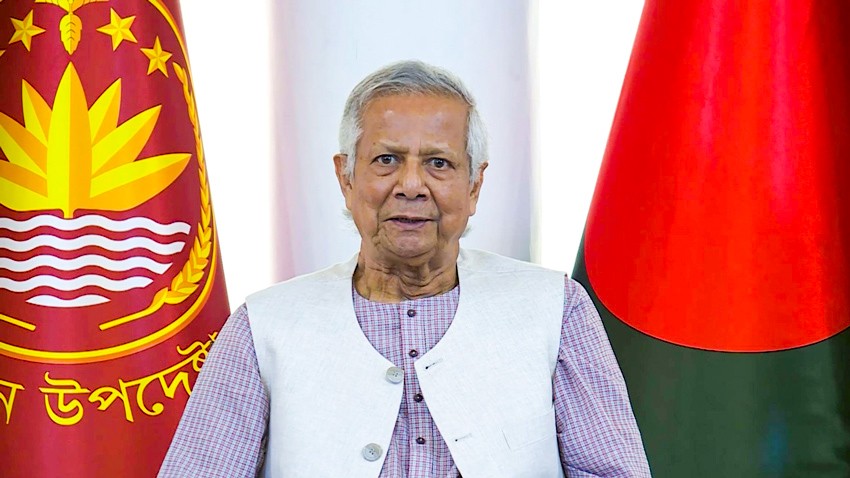
The Chief Adviser Professor Muhammad Yunus on Tuesday said those involved in the attack on Inqilab Moncho spokesperson Sharif Osman Hadi have already been initially identified and vowed that no one linked to the conspiracy would be spared, regardless of where they are.
Addressing the nation on the occasion of Victory Day, Yunus said the attack was not merely an assault on an individual but a direct blow to the country’s existence and its democratic journey.
He assured citizens that the interim government was treating the incident with the highest seriousness and was committed to bringing all perpetrators to justice.
The chief adviser said he was speaking with a heavy heart on a day of national celebration, recalling that Sharif Osman Hadi, described as a frontline figure of the July mass uprising, had recently been targeted in a violent attack. “This was not just an attack on a person. It was an attack on the democratic path of Bangladesh,” he said.
Yunus informed that Hadi remains in critical condition and is undergoing treatment. The government, he said, has taken all necessary steps to ensure both his medical care and security, including arranging his transfer to Singapore for advanced treatment. He urged citizens to pray sincerely for Hadi’s recovery.
Reiterating the government’s stance, Yunus said those behind what he termed a conspiracy would not escape accountability. “Wherever they may be, none of those involved will be spared,” he said, adding that attempts by “defeated fascist and terrorist forces” to destabilise the country would be completely thwarted.
He warned that fear, violence or bloodshed would not be able to derail Bangladesh’s democratic progress and called on citizens to remain calm and united.
He urged people not to fall for misinformation or rumours and said unity was essential to confront those seeking instability.
The chief adviser placed particular emphasis on protecting young people, saying they had become the biggest obstacle to the return of authoritarian forces.
He alleged that elements who had fled the country were afraid of fearless, unarmed youth who had no personal interests at stake and were determined to prevent the restoration of authoritarian rule before the upcoming election.
According to Yunus, these forces were rushing to remove obstacles ahead of the polls through covert violence and more dangerous plans. He called on the nation to speak with one voice in defence of the youth and to reject what he described as the remnants of old systems of subjugation.
Turning to the upcoming national election, Yunus said only two months remained and urged citizens to keep the period festive and peaceful. He said young people, free from fear, would play a key role in preventing violence and maintaining harmony.
Marking Victory Day, Yunus extended warm greetings to Bangladeshis at home and abroad, recalling the sacrifices of the 1971 Liberation War that led to independence after nine months of bloodshed.
He paid tribute to the martyrs and freedom fighters whose sacrifices continue to inspire resistance against injustice and oppression.
He said the promise of independence had been dimmed in recent years by authoritarianism and fascism but that the July mass uprising had reopened the path toward a discrimination-free, corruption-free, sovereign and democratic state.
Yunus highlighted the interim government’s reform agenda, saying progress was being made toward its completion through public participation. He also addressed concerns over the health of BNP Chairperson and former prime minister Khaleda Zia, who is currently hospitalised.
The chief adviser said the government has prioritised Khaleda Zia’s treatment since taking office, noting her role as a significant figure in the country’s political history.
He said the government had declared her a “person of exceptional state importance” and was providing all necessary assistance, including arrangements for treatment abroad if required, in line with her family’s wishes.
Yunus said the interim government has focused on three priorities: justice for the July–August killings, fundamental state reforms to establish a functional and accountable democratic system, and the holding of a free and fair election.
He said trials over killings during the July uprising were proceeding through due legal process and that a verdict had already been delivered in one case.
He claimed the International Crimes Tribunal had sentenced former prime minister Sheikh Hasina to death for directing indiscriminate killings of students, workers and civilians, and said Bangladesh had formally requested India to repatriate Hasina and former home minister Asaduzzaman Khan, who were convicted in the case.
The chief adviser said several institutional and structural reforms had already been completed, including amendments to dozens of outdated laws and the enactment of new ones.
He described the July National Charter as the most significant reform initiative, issued by order to ensure fundamental constitutional changes.
Yunus said the upcoming parliamentary election would also include a referendum on the July National Charter, allowing citizens to vote for or against the proposed reforms.
He said the Election Commission had announced the schedule, with both the general election and referendum set for February 12, and assured that all preparations had been finalised with full government support.
Calling the vote a historic moment, Yunus said the results would define the future character, structure and direction of Bangladesh.
He pledged that the election would be festive, inclusive, peaceful and credible, with security, administration, technology and monitoring given top priority.
He urged political leaders to treat one another as competitors, not enemies, and warned that attempts to steal ballot boxes would amount to robbing citizens of their freedom.
He called on voters to protect their votes and seek assistance from law enforcement if obstructed.
The chief adviser said administrative reshuffles had been carried out in the field administration and police to ensure neutrality and efficiency ahead of the polls, stressing that these changes were based on competence and professionalism, not political bias.
Yunus also highlighted progress on judicial independence, saying a separate secretariat had been established to ensure the judiciary’s administrative autonomy.
He described the move as a landmark step to safeguard judicial independence from political influence.
He said reforms were also under way in policing and human rights, citing the Police Commission Ordinance 2025 and the National Human Rights Commission Ordinance 2025 as measures to restore public trust after years of abuse under authoritarian rule.
Concluding his address, Yunus said Bangladesh stood at the threshold of a new chapter and called on citizens to use Victory Day as an opportunity for renewed unity.
He urged people to move forward together, inspired by both the Liberation War and the July uprising, to build a safe, happy and democratic Bangladesh for future generations, regardless of religion, ethnicity or gender identity.