9:07 pm, Tuesday, 28 April 2026

Electoral reform must continue as ongoing process: EU EOM chief observer


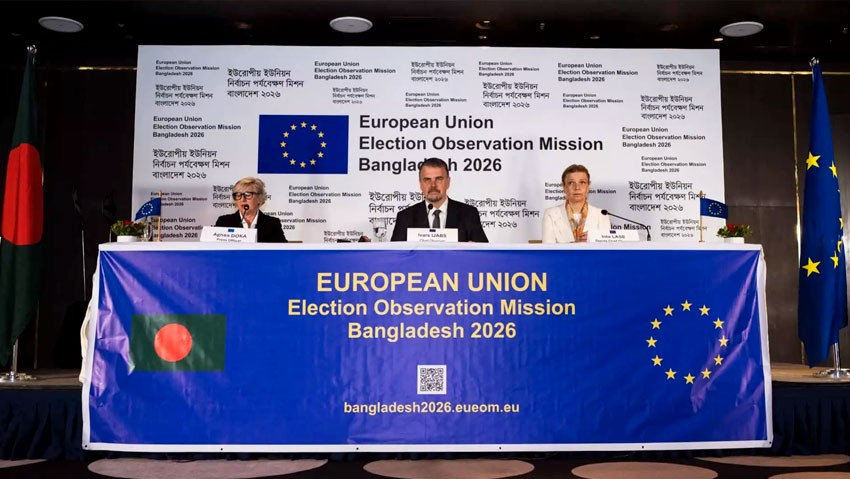
The Chief Observer of the European Union Election Observation Mission, Ivars Ijabs, has said that improving electoral systems is a continuous process in every country, including Bangladesh, and must be pursued through sustained reforms and dialogue.

Speaking at a briefing in a city hotel on Tuesday, he said the mission’s final report, along with 19 recommendations, aims to support the strengthening of future electoral processes in Bangladesh.

He stressed the importance of continued engagement with national stakeholders to ensure inclusive dialogue in the next phase of reforms, saying this is essential for reinforcing democracy, the rule of law and public trust in the electoral system.

Describing the recent elections as “credible and competently managed,” Ijabs said they represented a significant step toward restoring democratic governance.

He added that the process reflected a broad commitment to democratic principles among all participating stakeholders.

He noted that while the elections helped boost public confidence, certain legal and procedural gaps remain, highlighting the need for continued reforms in line with national frameworks, including the July National Charter.

The EU EOM chief observer also said the European Union remains ready to support Bangladesh in implementing the recommendations outlined in the report.

Although the mission’s field work has concluded, he assured that the European Union Delegation to Bangladesh will continue working with local partners to support democratic processes.

The mission’s final report, based on long-term observation across all 64 districts, was formally presented earlier and includes recommendations aimed at improving the integrity and transparency of future elections.

According to the EU EOM, the electoral framework largely aligns with international standards, and Bangladesh Election Commission operated independently and transparently during the process, helping maintain stakeholder confidence.

The mission deployed 223 international observers from EU member states, as well as Canada, Norway and Switzerland, across all districts to monitor the electoral process.

Ijabs expressed hope that the recommendations will be carefully considered by all relevant institutions, including the national parliament, to further strengthen democratic practices in the country.

Tag :
About Author Information

Electoral reform must continue as ongoing process: EU EOM chief observer

Update Time : 05:52:11 pm, Tuesday, 28 April 2026


The Chief Observer of the European Union Election Observation Mission, Ivars Ijabs, has said that improving electoral systems is a continuous process in every country, including Bangladesh, and must be pursued through sustained reforms and dialogue.

Speaking at a briefing in a city hotel on Tuesday, he said the mission’s final report, along with 19 recommendations, aims to support the strengthening of future electoral processes in Bangladesh.

He stressed the importance of continued engagement with national stakeholders to ensure inclusive dialogue in the next phase of reforms, saying this is essential for reinforcing democracy, the rule of law and public trust in the electoral system.

Describing the recent elections as “credible and competently managed,” Ijabs said they represented a significant step toward restoring democratic governance.

He added that the process reflected a broad commitment to democratic principles among all participating stakeholders.

He noted that while the elections helped boost public confidence, certain legal and procedural gaps remain, highlighting the need for continued reforms in line with national frameworks, including the July National Charter.

The EU EOM chief observer also said the European Union remains ready to support Bangladesh in implementing the recommendations outlined in the report.

Although the mission’s field work has concluded, he assured that the European Union Delegation to Bangladesh will continue working with local partners to support democratic processes.

The mission’s final report, based on long-term observation across all 64 districts, was formally presented earlier and includes recommendations aimed at improving the integrity and transparency of future elections.

According to the EU EOM, the electoral framework largely aligns with international standards, and Bangladesh Election Commission operated independently and transparently during the process, helping maintain stakeholder confidence.

The mission deployed 223 international observers from EU member states, as well as Canada, Norway and Switzerland, across all districts to monitor the electoral process.

Ijabs expressed hope that the recommendations will be carefully considered by all relevant institutions, including the national parliament, to further strengthen democratic practices in the country.