6:12 pm, Tuesday, 14 April 2026

Nation welcomes Pahela Baishakh with festivities; calls for unity, renewal


The nation is poised to usher in Pahela Baishakh, the first day of the Bengali New Year 1433, on Tuesday, with celebrations set to sweep across the country in a vibrant display of culture, tradition and collective optimism.

The annual festival, known as Pahela Baishakh, marks a symbolic fresh start as people bid farewell to the hardships of the past year and embrace new hopes. Over time, the occasion has grown into a unifying national celebration, cutting across religious and social divides and bringing together Bangladeshis at home and abroad.

In separate messages, President Mohammed Shahabuddin and Prime Minister Tarique Rahman extended greetings to the nation, highlighting the festival’s role in promoting harmony and shared identity.

The President described the occasion as a reflection of the country’s inclusive spirit, urging citizens to renew their commitment to unity and progress. He said the New Year inspires hope and resilience, encouraging people to move forward beyond past challenges.

Echoing similar sentiments, the prime minister said the festival represents the essence of the nation’s heritage and continues to inspire resilience and forward momentum. He also underscored its deep roots in agrarian life, noting that agricultural practices in Bangladesh remain closely tied to natural cycles despite technological advancements.

Across the country, preparations are in full swing, with both urban centres and rural communities gearing up for day-long festivities. Traditional fairs, cultural performances and folk games are expected to draw large crowds, reflecting the enduring appeal of centuries-old customs.

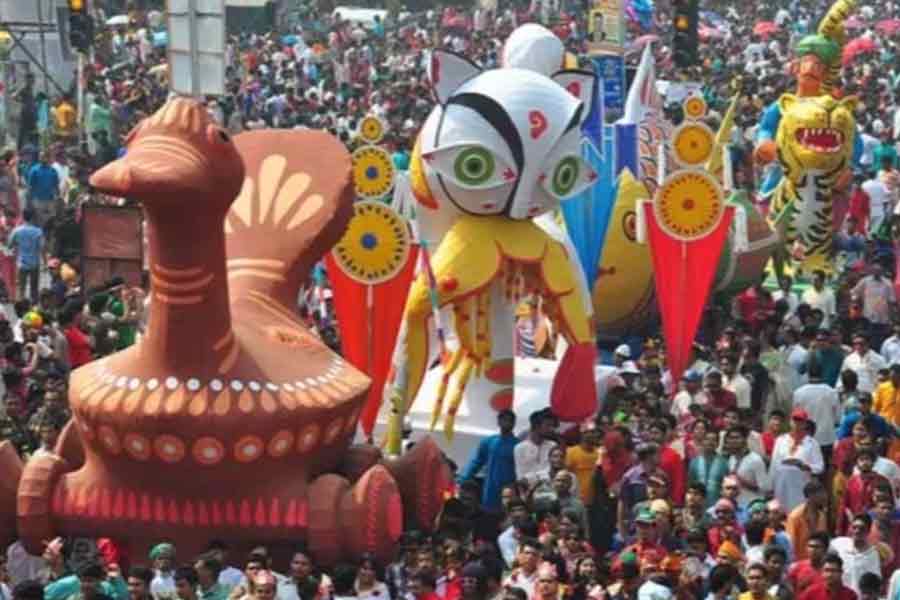
In Dhaka, Dhaka University will host its signature procession, featuring elaborate motifs inspired by folk traditions and national heritage. The parade, a hallmark of the capital’s celebrations, is expected to include music performances and participation from hundreds of students carrying national symbols.

Meanwhile, the iconic morning event at Ramna Batamul, organised by Chhayanaut, will once again centre on songs promoting peace and human values. Cultural group Udichi is also set to stage performances of music, poetry and dance as part of its Baishakh programme.

In Chattogram, the historic Jabbarer Boli Khela will return to Laldighi Maidan, continuing a long-standing local tradition that draws spectators each year.

Authorities, including Dhaka Metropolitan Police, have put in place enhanced security measures to ensure safe celebrations, particularly in key public venues.

Government bodies and cultural institutions such as Bangla Academy and Shilpakala Academy are set to organise events nationwide, underscoring the festival’s significance as a cornerstone of national culture.

As the New Year begins, Pahela Baishakh once again carries its enduring message”renewal, inclusiveness and the promise of a brighter future.


Tag :
About Author Information

Nation welcomes Pahela Baishakh with festivities; calls for unity, renewal

Update Time : 11:57:14 pm, Monday, 13 April 2026


The nation is poised to usher in Pahela Baishakh, the first day of the Bengali New Year 1433, on Tuesday, with celebrations set to sweep across the country in a vibrant display of culture, tradition and collective optimism.

The annual festival, known as Pahela Baishakh, marks a symbolic fresh start as people bid farewell to the hardships of the past year and embrace new hopes. Over time, the occasion has grown into a unifying national celebration, cutting across religious and social divides and bringing together Bangladeshis at home and abroad.

In separate messages, President Mohammed Shahabuddin and Prime Minister Tarique Rahman extended greetings to the nation, highlighting the festival’s role in promoting harmony and shared identity.

The President described the occasion as a reflection of the country’s inclusive spirit, urging citizens to renew their commitment to unity and progress. He said the New Year inspires hope and resilience, encouraging people to move forward beyond past challenges.

Echoing similar sentiments, the prime minister said the festival represents the essence of the nation’s heritage and continues to inspire resilience and forward momentum. He also underscored its deep roots in agrarian life, noting that agricultural practices in Bangladesh remain closely tied to natural cycles despite technological advancements.

Across the country, preparations are in full swing, with both urban centres and rural communities gearing up for day-long festivities. Traditional fairs, cultural performances and folk games are expected to draw large crowds, reflecting the enduring appeal of centuries-old customs.

In Dhaka, Dhaka University will host its signature procession, featuring elaborate motifs inspired by folk traditions and national heritage. The parade, a hallmark of the capital’s celebrations, is expected to include music performances and participation from hundreds of students carrying national symbols.

Meanwhile, the iconic morning event at Ramna Batamul, organised by Chhayanaut, will once again centre on songs promoting peace and human values. Cultural group Udichi is also set to stage performances of music, poetry and dance as part of its Baishakh programme.

In Chattogram, the historic Jabbarer Boli Khela will return to Laldighi Maidan, continuing a long-standing local tradition that draws spectators each year.

Authorities, including Dhaka Metropolitan Police, have put in place enhanced security measures to ensure safe celebrations, particularly in key public venues.

Government bodies and cultural institutions such as Bangla Academy and Shilpakala Academy are set to organise events nationwide, underscoring the festival’s significance as a cornerstone of national culture.

As the New Year begins, Pahela Baishakh once again carries its enduring message”renewal, inclusiveness and the promise of a brighter future.